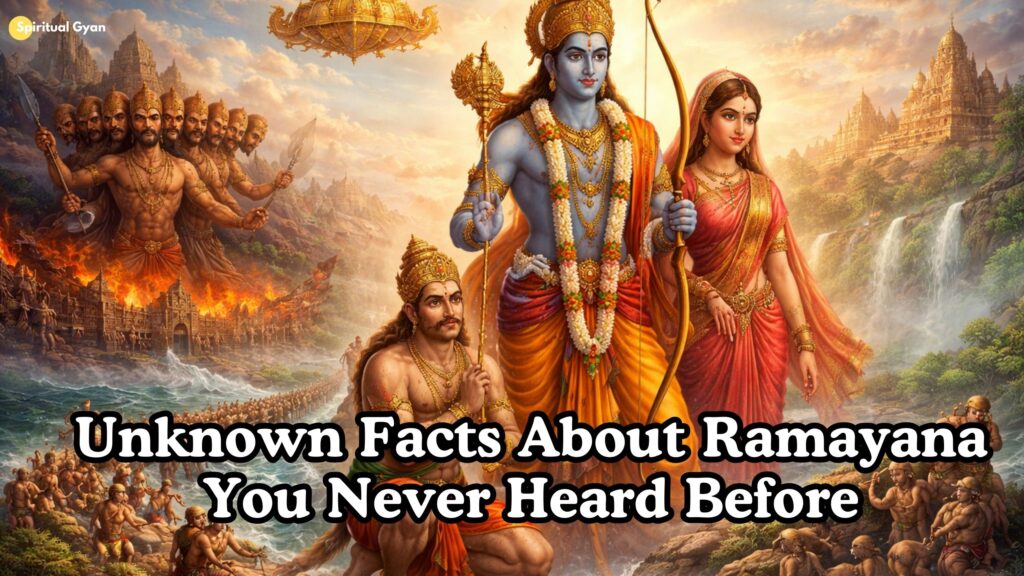
Unknown Facts About Ramayana You Never Heard Before
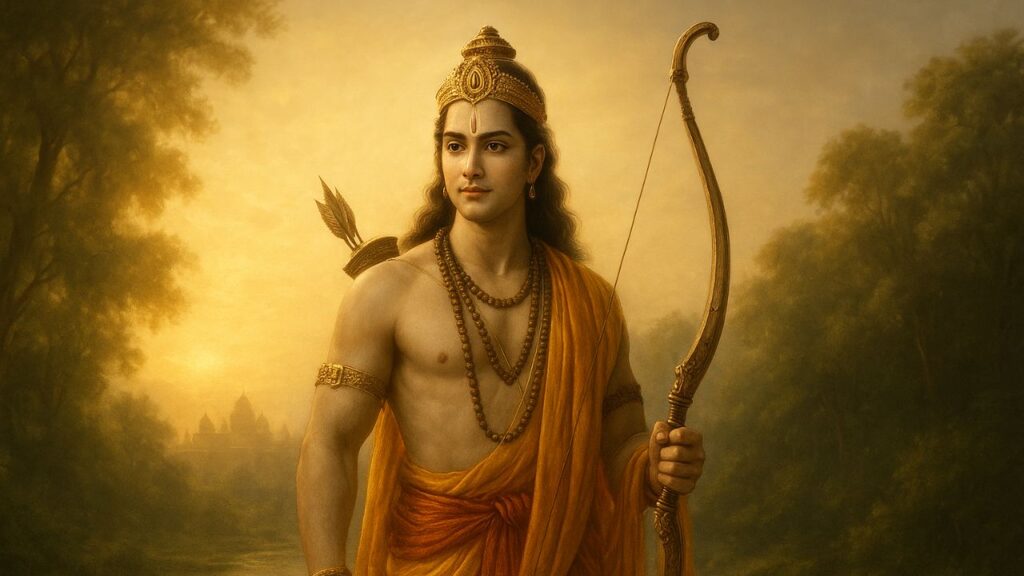
The Ramayana is not just a story — it is a civilizational foundation, a spiritual guide, and a cultural heartbeat that has shaped millions of lives for thousands of years. Composed by the sage Valmiki, the epic narrates the life of Rama, the prince of Ayodhya, who is considered the seventh incarnation of Vishnu.
Most people know the basic storyline — Rama’s exile, Sita’s abduction, Hanuman’s devotion, and the war in Lanka. But beneath this widely known narrative lie fascinating, lesser-known facts that reveal deeper philosophical, historical, and spiritual dimensions of this sacred text.
In this detailed blog, we will uncover unknown facts about the Ramayana you probably never heard before — hidden details, surprising interpretations, and powerful secrets that add new depth to this ancient epic.
The Ramayana Is Older Than You Think
Many scholars believe that the Ramayana dates back to around 500 BCE to 100 BCE. However, several astronomical references in the text suggest it could be far older. Detailed planetary alignments mentioned in the epic have been studied by researchers, who claim that certain configurations correspond to dates thousands of years earlier.
For example, the description of planetary positions during Rama’s birth has led some researchers to calculate a date around 5114 BCE. While debated, this possibility opens a fascinating discussion about the antiquity of Indian civilization and its advanced astronomical knowledge.
There Are Over 300 Versions of the Ramayana
One of the most surprising facts is that the Ramayana is not a single book. There are over 300 known versions across Asia.
Some famous versions include:
- Ramcharitmanas by Tulsidas
- Kamba Ramayanam by Kambar
- The Thai version known as Ramakien
- The Indonesian version performed in shadow puppetry traditions
Each version adapts the story according to regional culture, language, and values. In some versions, characters behave differently. In others, new subplots are added. This shows how deeply the Ramayana influenced diverse civilizations.
Valmiki Was Once a Bandit
Before becoming a sage, Valmiki was known as Ratnakara, a forest bandit who robbed travelers. According to legend, he once attempted to rob the sage Narada. During their conversation, Narada asked him whether his family would share the sins of his crimes.
When Ratnakara discovered they would not, he was shaken to the core. He began meditating intensely, chanting “Mara” (which eventually became “Rama” through repetition). Years passed, and an anthill grew around him. When he emerged, he was transformed — spiritually awakened and purified.
That is why he is called Valmiki — from “Valmika,” meaning anthill.
This transformation highlights one of the Ramayana’s deepest teachings: no one is beyond redemption.
Hanuman Forgot His Powers
One of the lesser-known aspects of Hanuman is that he was cursed as a child to forget his divine powers.
As a playful child, Hanuman once tried to swallow the sun, mistaking it for a fruit. His mischievous acts irritated the sages, who cursed him that he would forget his immense strength — but would remember it when someone reminded him.
This explains why, before leaping to Lanka, Hanuman needed Jambavan to remind him of his capabilities. Symbolically, this teaches that humans too possess immense potential — we just need awakening.
Ravana Was a Great Scholar
We often see Ravana as the villain. But surprisingly, Ravana was one of the greatest scholars of his time.
He was:
- A master of the Vedas
- A skilled musician
- A devotee of Shiva
- The author of the Shiva Tandava Stotram
Ravana was not evil by birth — his downfall came from arrogance and uncontrolled desire. The Ramayana does not present him as a simple villain but as a tragic example of brilliance corrupted by ego.
The Ramayana Mentions Advanced Technology
The epic describes flying vehicles called “Vimanas.” Ravana’s Pushpaka Vimana could travel anywhere at will.
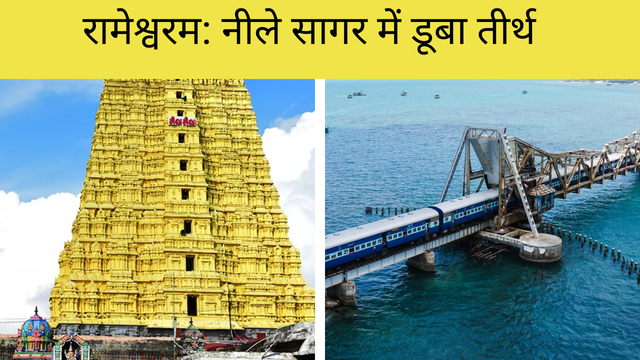
Some interpret these as symbolic, while others speculate about ancient technological knowledge. The bridge to Lanka, known as Rama Setu, is another mystery that continues to fascinate historians and scientists alike.
The description of warfare in the Ramayana also includes celestial weapons (Astras) that resemble modern missile systems in their destructive capability.
Sita Was Found in the Earth
Sita was not born in the traditional sense. She was discovered by King Janaka while plowing a field. That is why she is called “Bhumija” — daughter of the Earth.
Her origin symbolizes purity, fertility, and divine grace. It also connects her deeply with nature, making her one of the most powerful feminine archetypes in world literature.
Lakshmana Never Slept for 14 Years
Lakshmana is known for his loyalty, but few know that he is said to have not slept during the entire 14 years of exile.
According to legend, the goddess of sleep took his sleep and gave it to his wife Urmila. This sacrifice highlights the theme of silent devotion — Urmila’s sacrifice is often overlooked, making her one of the most underappreciated characters in the epic.
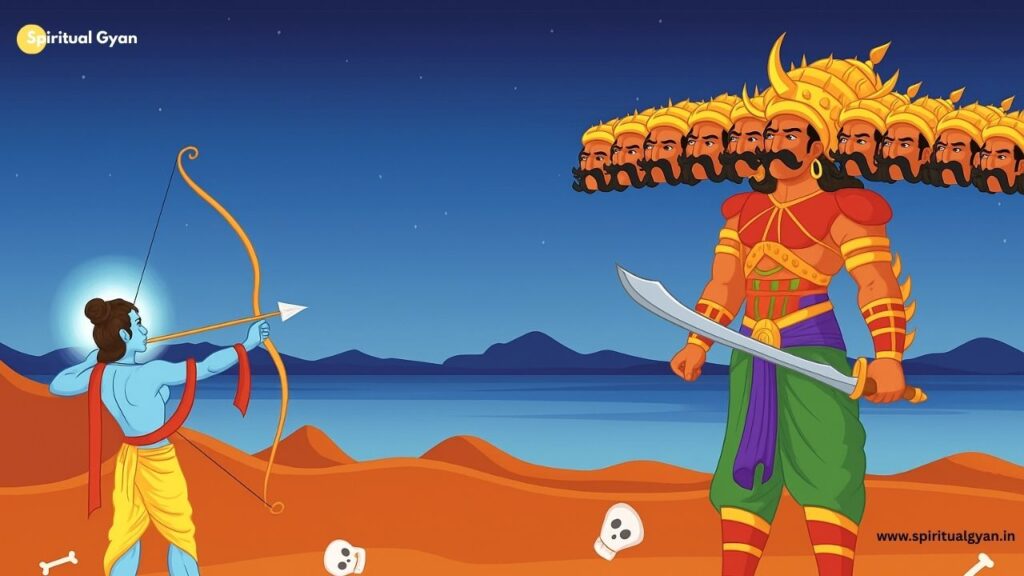
The Real Meaning of the 10 Heads of Ravana
Ravana’s ten heads are often interpreted symbolically. They represent:
- Kama (desire)
- Krodha (anger)
- Lobha (greed)
- Moha (attachment)
- Mada (pride)
- Matsarya (jealousy)
- Mind
- Intellect
- Consciousness
- Ego
Thus, Ravana is not merely an external enemy but the internal battle within every human being.
Rama Questioned Himself
Though considered divine, Rama often expressed human emotions — doubt, grief, confusion.
This is important because the Ramayana is not just about gods; it is about ideal human conduct. Rama’s struggles make him relatable. His greatness lies not in being flawless, but in choosing dharma despite inner conflict.
Hanuman Appears in the Mahabharata
Interestingly, Hanuman also appears in the Mahabharata. He meets Bhima and even appears on Arjuna’s chariot flag during the Kurukshetra war.
This crossover suggests that the timelines of the two epics intersect, creating a shared mythological universe.
The Bridge to Lanka Still Exists
The chain of limestone shoals between India and Sri Lanka is known as Rama Setu or Adam’s Bridge. Some believe it is the remains of the bridge built by Rama’s army.
While scientific debate continues regarding its formation, its cultural and religious significance remains immense.
The Ramayana Is a Spiritual Allegory
Beyond history, the Ramayana is often interpreted as an inner journey:
- Rama represents the soul.
- Sita represents the heart.
- Ravana represents ego.
- Lanka represents illusion.
- Hanuman represents devotion.
The war symbolizes the eternal struggle between dharma and adharma within us.
Why the Ramayana Still Matters
The Ramayana is not just an ancient epic — it is a living guide to life. Its unknown facts reveal layers of symbolism, psychology, philosophy, and cosmic mystery.
It teaches us that:
- Greatness comes with humility.
- Power without control leads to destruction.
- Devotion unlocks hidden strength.
- Dharma must be chosen even when it is difficult.
Even after thousands of years, the Ramayana continues to inspire, question, and transform human consciousness. If we look beyond the surface story, we discover that the Ramayana is not about the past — it is about us.
And perhaps the greatest unknown fact is this:The Ramayana is not a story you read. It is a story you live.
Also Read : Sita’s Strength: Untold Feminine Power in the Ramayana