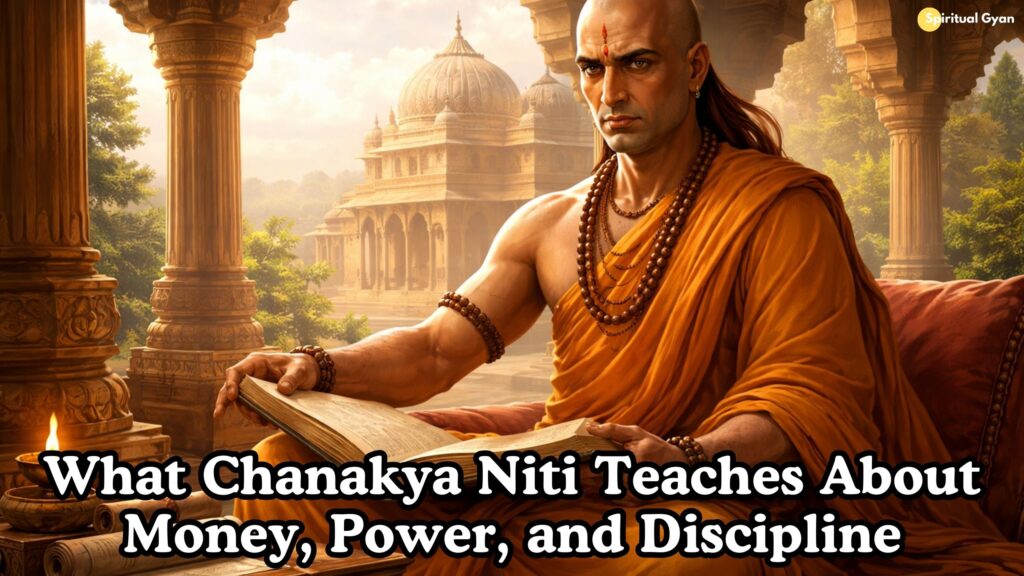
What Chanakya Niti Teaches About Money Power and Discipline
Chanakya Niti is one of the most profound ancient Indian texts on practical wisdom, statecraft, personal conduct, and life management. Written by Chanakya, also known as Kautilya or Vishnugupta, this timeless philosophy continues to guide individuals seeking success, stability, and self-mastery in the modern world. Among its most powerful teachings are lessons on money, power, and discipline—three forces that shape human destiny when used wisely and destroy it when misused. This article explores in depth what Chanakya Niti teaches about these three pillars of life and how its principles remain deeply relevant today.
Understanding Chanakya Niti: A Foundation of Practical Wisdom
Chanakya Niti is not a spiritual text focused on renunciation alone, nor is it merely a political manual. It is a balanced guide that integrates morality with realism. Chanakya believed that idealism without practicality leads to failure, while ambition without ethics leads to ruin. His teachings are rooted in observation of human nature, social structures, and the harsh realities of power and survival.
Money, power, and discipline are recurring themes in Chanakya Niti because they determine whether a person rises or falls in society. Chanakya emphasized that these forces are neutral; their impact depends entirely on the character and self-control of the individual who wields them.
Chanakya Niti on Money: Wealth as a Tool, Not a Master
Chanakya viewed money as essential for a dignified and independent life. According to him, poverty weakens moral strength, limits choices, and invites disrespect. However, he strongly warned against becoming a slave to wealth. Money, in Chanakya Niti, is meant to serve human purpose, not dominate it.
Wealth should be earned through righteous means, protected with intelligence, and spent with wisdom. Chanakya repeatedly advised individuals to avoid shortcuts, dishonesty, and greed while accumulating wealth, as ill-gotten money brings long-term suffering.
The Importance of Ethical Earnings
Chanakya clearly stated that wealth acquired through unethical means never provides lasting happiness. Such wealth attracts fear, enemies, and inner unrest. Ethical earnings, even if modest, bring peace of mind and social respect. He believed that money earned honestly strengthens character and builds trust, which is itself a form of invisible wealth.
In modern terms, this teaching applies to business ethics, fair employment practices, and transparent financial dealings. Chanakya’s philosophy reminds us that sustainability matters more than speed in wealth creation.
Saving and Protecting Wealth
Chanakya strongly emphasized the importance of saving. According to him, wealth that is not protected will inevitably be lost. He compared unprotected wealth to water stored in a cracked vessel—it leaks away unnoticed.
He advised people to plan for the future, maintain reserves, and avoid unnecessary extravagance. Even today, this aligns with principles of financial planning, emergency funds, and long-term investments.
Avoiding Wasteful Expenditure
Extravagance, according to Chanakya, is a sign of poor judgment. Spending money to impress others or satisfy uncontrolled desires weakens financial stability. Chanakya advocated purposeful spending—on education, health, family welfare, and productive ventures.
This teaching is especially relevant in a consumer-driven society where impulsive spending is normalized. Chanakya Niti urges restraint and conscious decision-making.
Read Also : Chanakya Niti vs Modern Life: Ancient Solutions to Today’s Problems
Charity and Social Responsibility
Chanakya did not oppose charity but insisted it should be thoughtful. Charity given to unworthy recipients or for personal glory was discouraged. True charity, he believed, uplifts society and strengthens moral order.
This idea translates today into responsible philanthropy, social investment, and meaningful contributions rather than performative generosity.
Chanakya Niti on Power: Authority Requires Wisdom and Control
Power, in Chanakya Niti, is both necessary and dangerous. Chanakya acknowledged that power enables order, protection, and progress, but he also warned that uncontrolled power leads to arrogance, cruelty, and downfall.
Chanakya believed that power must always be guided by intelligence, humility, and accountability. A powerful individual without discipline becomes a threat to society and to himself.
The Nature of True Power
According to Chanakya, true power does not come from position alone but from knowledge, strategic thinking, and emotional control. A king or leader who lacks wisdom is weaker than a commoner with intelligence.
This teaching applies equally to political leaders, corporate executives, and social influencers today. Authority without understanding invites resistance and collapse.
Power and Responsibility
Chanakya emphasized that power increases responsibility. A ruler or leader must prioritize the welfare of the people over personal pleasure. Self-serving leadership, he warned, destroys legitimacy and invites rebellion.
In modern governance and organizational leadership, this principle highlights the importance of servant leadership and ethical decision-making.
Avoiding Abuse of Power
Abuse of power is one of the strongest warnings in Chanakya Niti. Chanakya observed that leaders often fall because they mistake fear for loyalty. He stressed that power sustained by fear alone is fragile.
He advised leaders to cultivate respect, fairness, and trust, as these create durable authority. This insight remains highly relevant in workplaces and institutions worldwide.
Strategic Use of Power
Chanakya was a master strategist who believed that power should be applied selectively and intelligently. He discouraged unnecessary displays of force and encouraged diplomacy, alliances, and timing.
This balanced approach to power can be seen today in successful negotiation, conflict resolution, and long-term planning.
Chanakya Niti on Discipline: The Core of Personal Mastery
Discipline is the foundation upon which Chanakya built all other virtues. Without discipline, money leads to greed, power leads to tyranny, and knowledge leads to arrogance. Discipline, according to Chanakya, begins with control over the mind and senses.
He believed that self-discipline separates humans from animals and leaders from followers.
Control Over Desires
Chanakya taught that uncontrolled desires are the greatest enemy of success. Lust, anger, greed, pride, and attachment weaken judgment and destroy inner balance.
He encouraged individuals to observe their impulses and act with awareness rather than reaction. This teaching aligns closely with modern concepts of emotional intelligence and mindfulness.
Discipline in Daily Life
Chanakya advocated disciplined routines, including proper sleep, food habits, and work ethics. A disorganized lifestyle, he believed, leads to mental weakness and poor decision-making.
Even today, productivity experts emphasize structure and consistency, reflecting the timeless relevance of Chanakya’s views.
Discipline in Speech and Action
According to Chanakya Niti, careless speech creates enemies, while measured words build respect. He advised people to speak only when necessary and ensure that words align with purpose.
Similarly, disciplined action—acting after thought rather than impulse—prevents regret and failure.
The Role of Discipline in Leadership
For leaders, discipline is non-negotiable. Chanakya believed that a leader’s personal discipline sets the standard for the entire organization or kingdom. An undisciplined leader creates chaos, even with good intentions.
This principle is clearly visible in modern organizations where leadership behavior shapes workplace culture.
The Interconnection of Money, Power, and Discipline
Chanakya Niti treats money, power, and discipline as interconnected forces. Discipline governs how money is earned and spent. Discipline determines how power is exercised. Without discipline, both money and power become destructive.
Chanakya taught that inner victory precedes outer success. A disciplined individual naturally attracts wealth and influence, while an undisciplined one loses both.
Lessons for Modern Life
In today’s fast-paced, competitive world, Chanakya Niti offers grounding wisdom. Financial stress, leadership failures, and lack of self-control are common challenges that Chanakya addressed centuries ago.
His teachings encourage long-term thinking, ethical behavior, and inner strength—qualities that remain essential regardless of time or technology.
Applying Chanakya Niti in Personal Finance
By earning honestly, saving consistently, spending consciously, and giving wisely, individuals can build financial stability without sacrificing peace of mind. Chanakya’s principles provide a moral compass for navigating modern economic pressures.
Applying Chanakya Niti in Leadership and Career
Whether managing a team or building a business, Chanakya’s insights into power and responsibility offer practical guidance. Fairness, strategy, and self-control lead to sustainable success.
Applying Chanakya Niti for Self-Discipline
Practicing moderation, emotional control, and mindful action helps individuals overcome distractions and achieve clarity. Chanakya Niti encourages mastery over oneself as the highest achievement.
Why Chanakya Niti Remains Relevant Today
Chanakya understood human psychology deeply. Greed, ambition, fear, and desire have not changed over time. This is why his teachings continue to resonate across cultures and generations.
In a world driven by instant gratification, Chanakya Niti reminds us of the power of patience, wisdom, and discipline.
The Timeless Power of Chanakya Niti
Chanakya Niti teaches that money should support life, power should protect society, and discipline should govern both. When these forces are aligned with wisdom and ethics, they create stability, respect, and lasting success.
By applying Chanakya’s teachings on money, power, and discipline, individuals can build not only external success but also inner strength and clarity. This timeless wisdom continues to guide those who seek balance between ambition and integrity in every age.
Read Also : Chanakya Niti on Woman Empowerment: Ancient Wisdom for Modern Gender Equality