
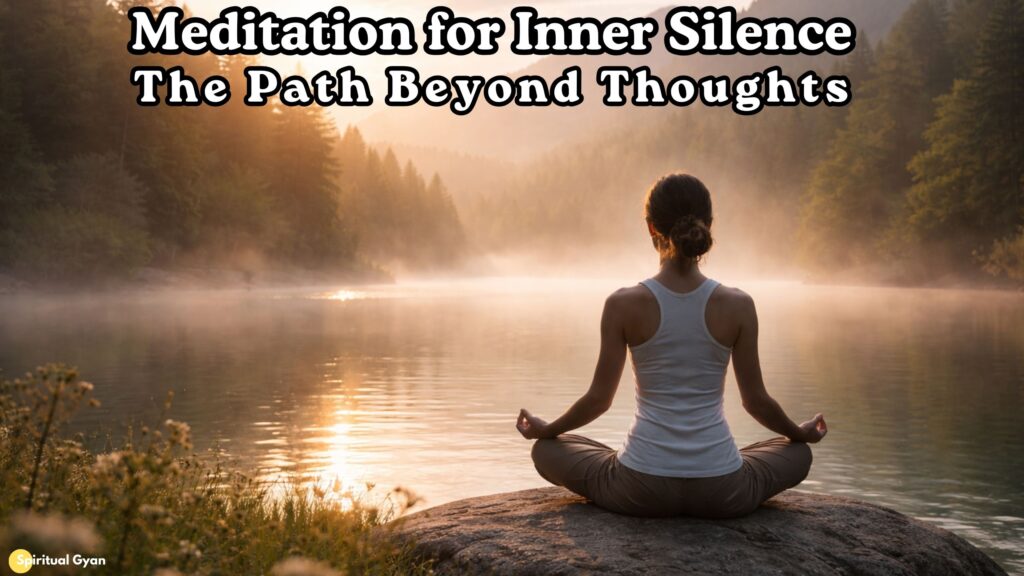
Meditation for Inner Silence
In the modern world, silence has become increasingly rare—not just in our surroundings, but within ourselves. Even when we sit alone in a quiet room, our mind continues to race with thoughts, worries, plans, and memories. This constant internal chatter creates stress, confusion, and emotional exhaustion. The search for peace often leads us outward, but true peace lies within. Meditation for inner silence is the practice of turning inward and discovering a space beyond thoughts—a space where clarity, stillness, and deep awareness exist naturally.
Inner silence is not about forcing the mind to stop thinking. Instead, it is about gently transcending thoughts and observing them without attachment. Through consistent meditation, we begin to experience moments where thoughts fade into the background, and a profound sense of calm emerges. This blog explores the journey of meditation as a path toward inner silence, helping you understand its importance, benefits, and practical methods to achieve it.
Understanding Inner Silence and Its True Meaning
Inner silence is often misunderstood as a blank or empty state, but it is actually a deeply aware and conscious presence. It is a state where the mind is no longer dominated by uncontrolled thoughts. Instead, awareness becomes clear, steady, and peaceful. In this state, you are not reacting to every thought or emotion; you are simply observing them as they come and go.
This silence is not something that needs to be created artificially. It already exists within you, beneath the layers of mental noise. Meditation helps remove these layers, allowing you to reconnect with your natural state of stillness. When you experience inner silence, you feel grounded, present, and free from unnecessary mental clutter.
Why the Mind is Always Filled with Thoughts
The human mind is designed to think. It constantly processes information, analyzes situations, and tries to protect us by predicting future outcomes. While this function is useful, it becomes overwhelming when thoughts run continuously without control. Most of our thoughts are repetitive and unproductive, often revolving around past regrets or future anxieties.
This endless thinking creates a cycle where the mind never gets rest. Even during sleep, the mind continues to process experiences through dreams. Meditation offers a way to break this cycle by teaching you how to step back from your thoughts instead of getting lost in them. Over time, this reduces the intensity and frequency of unnecessary thinking.
The Connection Between Meditation and Inner Silence
Meditation is the bridge between a restless mind and inner silence. It is not about suppressing thoughts but about observing them without judgment. When you sit in meditation, you begin to notice how thoughts arise and disappear on their own. This observation creates a gap between you and your thoughts.
As this gap widens, thoughts lose their power over you. You no longer feel compelled to react to every idea or emotion. Gradually, moments of silence begin to appear between thoughts. These moments expand with practice, leading to a deeper and more sustained experience of inner silence.
Meditation trains your awareness to remain steady, even when thoughts are present. This steadiness is the foundation of inner peace and clarity.
Benefits of Practicing Inner Silence Through Meditation
Meditation for inner silence offers a wide range of benefits that impact every aspect of life. One of the most immediate benefits is reduced stress. When the mind becomes quiet, the body also relaxes, leading to lower levels of anxiety and tension. This creates a sense of calm that stays with you throughout the day.
Another important benefit is improved focus and concentration. A silent mind is not easily distracted, allowing you to work more efficiently and make better decisions. Emotional stability also improves, as you become less reactive to external situations.
Inner silence enhances self-awareness, helping you understand your thoughts, emotions, and behaviors more clearly. This awareness leads to better relationships, as you respond with patience and understanding rather than impulsive reactions.
Additionally, meditation promotes spiritual growth by connecting you with your deeper self. It allows you to experience a sense of fulfillment that does not depend on external circumstances.
Read Also : Meditation for Beginners: How to Start and Stay Consistent
Common Misconceptions About Meditation
Many people avoid meditation because of misconceptions about what it involves. One common belief is that meditation requires stopping all thoughts completely. This idea often leads to frustration, as the mind naturally produces thoughts. In reality, meditation is about observing thoughts, not eliminating them.
Another misconception is that meditation requires hours of practice. While longer sessions can be beneficial, even a few minutes of daily meditation can bring noticeable changes. Consistency is more important than duration.
Some people also believe that meditation is only for spiritual or religious individuals. However, meditation is a universal practice that benefits anyone seeking mental clarity and peace, regardless of their beliefs.
Preparing for Meditation: Creating the Right Environment
To begin your journey toward inner silence, it is important to create a supportive environment. Choose a quiet and comfortable space where you will not be disturbed. This could be a corner of your room, a balcony, or any place where you feel at ease.
Sit in a comfortable position with your back straight. You can sit on a chair or on the floor with crossed legs. The goal is to remain relaxed yet alert. Close your eyes gently and bring your attention inward.
While the external environment plays a role, the most important factor is your intention. Approach meditation with a sense of curiosity rather than expectation. There is no need to force any particular experience.
Basic Meditation Technique for Inner Silence
Start by focusing on your breath. Notice the natural rhythm of inhalation and exhalation. Do not try to control your breathing; simply observe it as it is. This helps anchor your attention in the present moment.
As you continue, thoughts will arise. Instead of resisting them, acknowledge their presence and gently return your focus to the breath. This process may repeat many times, and that is completely normal.
Over time, you will begin to notice gaps between thoughts. These gaps are moments of inner silence. Allow yourself to rest in these moments without trying to hold onto them. The more you practice, the longer and deeper these moments become.
Going Beyond Thoughts: The Deeper Stage of Meditation
As your practice deepens, you may experience a shift where you are no longer focused on the breath. Instead, you become aware of awareness itself. This is a state where you are simply present, without effort or control.
In this stage, thoughts may still arise, but they do not disturb your inner peace. You remain as a silent observer, unaffected by the movement of the mind. This is the true essence of meditation—resting in pure awareness.
This state cannot be forced or achieved through effort. It unfolds naturally as the mind becomes more relaxed and less attached to thoughts.
Challenges on the Path to Inner Silence
The journey to inner silence is not always easy. One of the most common challenges is restlessness. The mind may resist stillness and create distractions. This is a natural part of the process.
Another challenge is impatience. Many people expect immediate results and become discouraged when they do not experience silence quickly. It is important to remember that meditation is a gradual process that requires patience and consistency.
Sleepiness can also occur during meditation, especially if you are tired. To overcome this, try meditating at a time when you are alert, such as early morning.
Emotional release is another possible experience. As the mind becomes quiet, suppressed emotions may surface. Allow these emotions to pass without judgment, as they are part of the healing process.
Integrating Inner Silence into Daily Life
Meditation is not limited to sitting in a quiet space. The goal is to carry inner silence into your daily activities. This can be done by practicing mindfulness—being fully present in whatever you are doing.
Whether you are eating, walking, or working, bring your attention to the present moment. Notice your surroundings, your actions, and your thoughts without getting lost in them. This creates a sense of calm and awareness throughout the day.
Taking short breaks to pause and breathe can also help maintain inner silence. Even a few moments of conscious breathing can reset your mind and bring you back to a state of balance.
The Role of Consistency in Meditation
Consistency is the key to experiencing the benefits of meditation. Practicing regularly helps train the mind to become more stable and less reactive. It is better to meditate for a few minutes every day than to practice occasionally for longer periods.
Set a fixed time for meditation, such as early morning or before going to bed. This creates a routine that makes it easier to stay committed. Over time, meditation becomes a natural part of your daily life.
Inner Silence and Spiritual Awakening
Inner silence is often described as the gateway to spiritual awakening. When the mind becomes quiet, you begin to experience a deeper sense of connection with yourself and the universe. This connection brings a feeling of completeness and peace that is not dependent on external factors.
In this state, you realize that you are not your thoughts or emotions. You are the awareness that observes them. This realization transforms your perspective on life, allowing you to live with greater clarity and purpose.
Embracing the Journey Within
Meditation for inner silence is a journey of self-discovery. It is not about achieving perfection or escaping reality, but about understanding the nature of the mind and going beyond its limitations. Through consistent practice, you begin to experience moments of stillness that gradually expand into a lasting sense of peace.
Inner silence is always within you, waiting to be discovered. Meditation is simply the path that leads you there. As you continue this journey, you will find that true happiness does not come from external achievements, but from the quiet awareness that lies beyond thoughts.
Start with small steps, remain patient, and trust the process. Over time, you will realize that the silence you were searching for has always been a part of you.
Read Also : 10 Proven Benefits of Daily Meditation Backed by Science