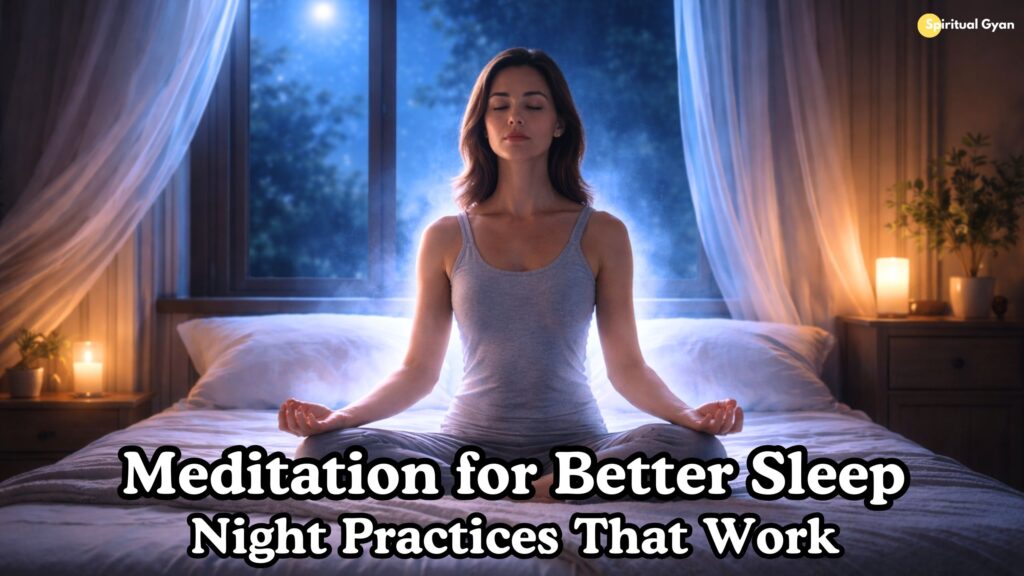
Meditation for Better Sleep: Night Practices That Work
Sleep is not just a physical necessity, it is a deeply restorative process that affects the mind, emotions, and overall well-being. In today’s fast-paced digital world, millions of people struggle with falling asleep, staying asleep, or waking up refreshed. Stress, anxiety, excessive screen exposure, irregular routines, and constant mental stimulation have quietly disrupted the natural sleep cycle. Meditation for better sleep has emerged as one of the most effective, natural, and scientifically supported solutions to this modern problem. Unlike medication, meditation works gently by calming the nervous system, slowing mental activity, and guiding the body into a state of deep rest.
This blog explores how meditation can transform your nights, why it works so effectively, and which night meditation practices truly help you sleep better. By understanding both the science and the ancient wisdom behind sleep meditation, you can create a nightly ritual that not only improves sleep but also enhances emotional balance, mental clarity, and long-term health.
Understanding the Connection Between Meditation and Sleep
Meditation and sleep are deeply interconnected because both involve shifts in brain activity and nervous system regulation. When you meditate, your brain gradually moves from high-frequency beta waves, associated with alertness and stress, into alpha and theta waves, which are linked to relaxation and early sleep stages. This transition mirrors the natural process of falling asleep, making meditation an ideal bridge between wakefulness and rest.
Stress activates the sympathetic nervous system, commonly known as the fight-or-flight response. This keeps the body alert, the heart rate elevated, and the mind restless. Meditation activates the parasympathetic nervous system, often referred to as the rest-and-digest response. When this system dominates, breathing slows, muscles relax, cortisol levels drop, and the body becomes ready for sleep. Over time, regular meditation retrains the nervous system to enter this relaxed state more easily, even outside of formal practice.
Why Modern Sleep Problems Are Increasing
Sleep disorders have become increasingly common due to lifestyle changes rather than biological deficiencies. Excessive screen time before bed exposes the brain to blue light, which suppresses melatonin, the hormone responsible for regulating sleep. Constant multitasking and information overload keep the mind hyperactive long after the body is tired. Emotional stress, unresolved thoughts, and anxiety further prevent the mind from settling into rest.
Meditation addresses these issues at their root. Instead of forcing sleep, it gently removes the mental and emotional barriers that prevent sleep from occurring naturally. This is why meditation for insomnia and poor sleep quality is now recommended by sleep specialists, psychologists, and holistic health practitioners worldwide.
How Night Meditation Differs from Daytime Meditation
Night meditation has a unique purpose compared to daytime mindfulness practices. While daytime meditation often aims to improve focus, awareness, and emotional regulation, night meditation is designed to release tension, quiet the mind, and guide consciousness toward sleep. The intention is not alert awareness but gentle surrender.
The pace of night meditation is slower, the breathing is deeper, and the guidance often includes body relaxation, visualization, or soothing affirmations. Silence and darkness play an important role, allowing the senses to withdraw naturally. When practiced consistently, night meditation creates a mental association between meditation and sleep, making it easier to fall asleep night after night.
The Science Behind Meditation for Better Sleep
Scientific research supports the effectiveness of meditation for improving sleep quality. Studies have shown that mindfulness meditation reduces insomnia symptoms, decreases nighttime awakenings, and improves overall sleep efficiency. Meditation lowers levels of cortisol and increases melatonin production, both essential for healthy sleep cycles.
Brain imaging studies reveal that meditation reduces activity in the default mode network, the part of the brain responsible for repetitive thinking and worrying. This is particularly beneficial for people who struggle with racing thoughts at night. Regular meditation also improves emotional regulation, making it easier to let go of the day’s stresses before bedtime.
Preparing Your Mind and Environment for Night Meditation
The effectiveness of night meditation is enhanced when the environment supports relaxation. A calm, dimly lit room signals the brain that it is time to slow down. Reducing noise, lowering light intensity, and maintaining a comfortable temperature help the body transition into rest. Consistency is equally important. Meditating at the same time each night trains the body’s internal clock to expect sleep.
Mentally, preparation involves setting aside worries and responsibilities. Night meditation is not about problem-solving or reflection. It is about rest. Giving yourself permission to stop thinking about the day is a powerful step toward better sleep.
Breath Awareness Meditation for Deep Sleep
Breath awareness is one of the simplest and most effective night meditation practices. By focusing on slow, gentle breathing, the mind naturally disengages from stressful thoughts. Deep breathing activates the vagus nerve, which reduces heart rate and blood pressure, creating an immediate sense of calm.
In night meditation, the breath should be effortless and rhythmic. Observing the natural rise and fall of the abdomen creates a soothing anchor for the mind. As attention remains on the breath, mental chatter gradually fades, allowing sleep to emerge naturally.
Body Scan Meditation for Releasing Physical Tension
Physical tension often goes unnoticed until bedtime, when the body finally slows down. Body scan meditation systematically brings awareness to each part of the body, encouraging deep relaxation. Starting from the feet and moving upward, attention is gently placed on each area, allowing muscles to soften and release stored tension.
This practice is particularly effective for people who experience restless sleep or wake up feeling physically stiff. By consciously relaxing the body before sleep, body scan meditation prepares the muscles and nervous system for uninterrupted rest.
Guided Sleep Meditation and Visualization
Guided sleep meditation uses spoken guidance to lead the mind into relaxation. Visualization is often included, inviting the listener to imagine peaceful scenes such as a calm ocean, a quiet forest, or a warm, protective light. These images engage the imagination in a soothing way, replacing anxious thoughts with comforting sensations.
Visualization works because the brain responds to imagined experiences similarly to real ones. When the mind visualizes safety and calm, the body responds by relaxing. This makes guided meditation especially helpful for beginners or individuals dealing with anxiety-related sleep issues.
Mantra and Sound-Based Meditation for Nighttime Calm
Mantra meditation involves silently repeating a calming word or sound. At night, mantras should be slow, gentle, and emotionally neutral. The repetition gives the mind a simple focus, preventing it from wandering into stressful thought patterns.
Sound-based meditation, including soft chanting or listening to calming frequencies, can also support sleep. Certain sounds encourage alpha and theta brain waves, which are associated with relaxation and drowsiness. The key is subtlety, as overly stimulating sounds can interfere with sleep rather than support it.
Mindfulness Meditation for Letting Go of Thoughts
Many people struggle to sleep because they are trying too hard to control their thoughts. Mindfulness meditation teaches a different approach: observing thoughts without engagement. When thoughts are acknowledged without judgment and allowed to pass, they lose their emotional charge.
At night, mindfulness meditation helps break the cycle of worry and rumination. By shifting from resistance to acceptance, the mind naturally settles. This gentle awareness creates a mental environment where sleep can arise without effort.
Yoga Nidra: The Art of Conscious Sleep
Yoga Nidra, often referred to as yogic sleep, is a powerful meditation technique that induces profound relaxation while maintaining a trace of awareness. Practiced lying down, it guides the practitioner through stages of physical relaxation, breath awareness, visualization, and deep mental rest.
Yoga Nidra is particularly effective for people suffering from chronic insomnia or sleep deprivation. Even when full sleep does not occur, the body receives restorative rest equivalent to several hours of deep sleep. Regular practice can dramatically improve sleep quality and emotional resilience.
Meditation for Insomnia and Night Anxiety
Insomnia is often rooted in fear of not sleeping. This fear creates anxiety, which further prevents sleep. Meditation addresses this cycle by shifting focus away from sleep itself. When the goal becomes relaxation rather than sleep, pressure dissolves, and sleep often follows naturally.
Night anxiety is eased through grounding practices that bring attention back to the body and breath. Over time, meditation builds trust in the body’s ability to rest, reducing the fear and frustration associated with insomnia.
Creating a Sustainable Night Meditation Routine
Consistency is the most important factor in using meditation for better sleep. A short, regular practice is more effective than occasional long sessions. Even ten minutes of night meditation can create noticeable improvements when practiced daily.
A sustainable routine should feel comforting rather than demanding. Meditation should be viewed as a gift to yourself, not another task to complete. When practiced with gentleness and patience, meditation becomes a natural part of the sleep ritual.
Common Mistakes in Night Meditation
One common mistake is forcing relaxation. Sleep cannot be controlled, only invited. Trying too hard to meditate perfectly or expecting immediate results creates tension. Another mistake is using stimulating meditation techniques at night, such as intense focus or energizing breathwork, which can interfere with sleep.
Expectations should be realistic. Meditation improves sleep gradually by retraining the nervous system. Trusting the process is essential for long-term success.
Long-Term Benefits of Meditation for Sleep and Life
The benefits of night meditation extend far beyond sleep. Improved sleep leads to better concentration, emotional stability, immune function, and overall vitality. Meditation also enhances self-awareness, helping individuals respond to stress more calmly throughout the day.
Over time, meditation fosters a healthier relationship with rest. Sleep becomes a natural rhythm rather than a nightly struggle. This sense of ease carries into waking life, creating a more balanced and peaceful existence.
Integrating Meditation with Healthy Sleep Habits
Meditation works best when combined with supportive sleep habits. Reducing screen exposure before bed, maintaining a consistent sleep schedule, and creating a calming bedtime environment amplify the effects of meditation. Together, these practices create a holistic approach to sleep health.
Rather than seeking quick fixes, embracing meditation as part of a mindful lifestyle leads to lasting improvements in sleep and overall well-being.
Final Thoughts on Meditation for Better Sleep
Meditation for better sleep is not about escaping thoughts or forcing rest. It is about creating the inner conditions where sleep can naturally arise. Through gentle awareness, relaxed breathing, and consistent practice, meditation dissolves the barriers that prevent deep rest.
In a world that rarely slows down, night meditation offers a sacred pause. It invites the body to heal, the mind to settle, and the soul to rest. When practiced with patience and sincerity, meditation transforms not only the quality of sleep but the quality of life itself.
Read Also : Morning Meditation Routine for Inner Peace and Focus