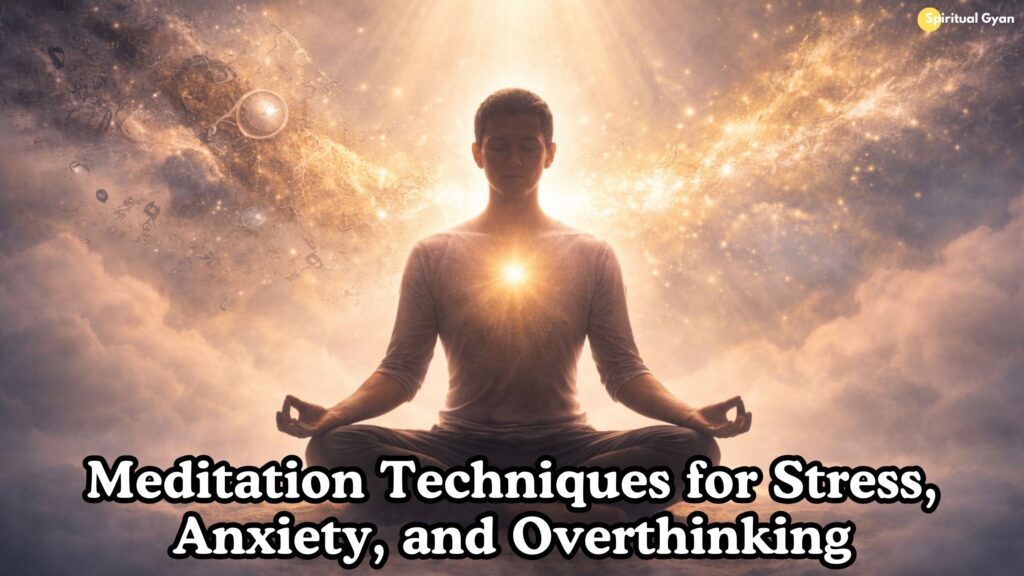
Meditation Techniques for Stress Anxiety and Overthinking
In today’s fast-paced world, stress, anxiety, and overthinking have quietly become part of everyday life. Deadlines, responsibilities, constant digital stimulation, financial pressure, relationship expectations, and uncertainty about the future continuously activate the nervous system. What begins as mild mental pressure often grows into chronic stress, persistent anxiety, and exhausting cycles of overthinking that drain emotional energy and clarity.
Stress is the body’s natural response to perceived threats or demands. While short-term stress can be useful for motivation and survival, long-term stress keeps the body in a constant state of alertness. Anxiety develops when the mind begins to anticipate future threats, often without immediate danger. Overthinking emerges when the brain repeatedly revisits past events or imagines future outcomes, attempting to gain control but instead creating mental fatigue.
Meditation offers a powerful, natural way to interrupt this cycle. Unlike temporary distractions or surface-level relaxation techniques, meditation trains the mind to observe thoughts without becoming trapped in them. Over time, it reshapes how the brain responds to stress and restores a sense of inner stability.
How Meditation Helps Calm the Mind and Nervous System
Meditation works by shifting the body from a stress-dominated state into a relaxed, balanced state. When practiced consistently, meditation activates the parasympathetic nervous system, which slows heart rate, lowers cortisol levels, and promotes deep relaxation. This physiological response directly counteracts stress and anxiety.
At a mental level, meditation creates space between awareness and thought. Instead of reacting automatically to every worry or fear, the mind learns to witness thoughts as passing events. This shift reduces emotional reactivity and weakens the grip of overthinking patterns. Scientific studies show that regular meditation increases activity in brain regions associated with emotional regulation, focus, and resilience while reducing activity in fear-based centers.
Meditation does not eliminate problems, but it changes the way the mind relates to them. With practice, challenges feel more manageable, thoughts become clearer, and emotional responses soften.
Mindfulness Meditation for Stress Relief
Mindfulness meditation is one of the most effective techniques for reducing stress. It involves bringing full attention to the present moment without judgment. Instead of dwelling on past regrets or future worries, mindfulness anchors awareness in what is happening right now.
During mindfulness meditation, attention is often placed on the breath, bodily sensations, or sounds in the environment. When the mind wanders, it is gently brought back without criticism. This simple process trains the brain to disengage from constant mental noise.
Over time, mindfulness meditation reduces stress by breaking the habit of rumination. The mind becomes less reactive to external pressures and internal thoughts. Stressful situations still occur, but they no longer overwhelm the nervous system in the same way.
Read Also : 10 Proven Benefits of Daily Meditation Backed by Science
Breathing-Based Meditation for Anxiety Reduction
Breathing meditation is especially powerful for anxiety because it directly regulates the nervous system. Anxiety is closely linked to shallow, rapid breathing patterns that signal danger to the brain. Slow, intentional breathing sends a message of safety and calm.
In breathing meditation, awareness is placed on the natural rhythm of inhalation and exhalation. The breath may be gently lengthened or counted to create stability. As breathing slows, heart rate decreases and muscle tension releases.
This form of meditation is particularly useful during moments of acute anxiety, panic, or restlessness. With regular practice, breathing meditation retrains the body to remain calm even in challenging situations.
Body Scan Meditation for Releasing Tension
Body scan meditation focuses attention systematically on different parts of the body. Stress and anxiety often manifest as physical tension, especially in the shoulders, neck, jaw, and stomach. The body scan allows awareness to identify and release these hidden tension patterns.
During this practice, attention moves slowly from the feet to the head, noticing sensations without trying to change them. As awareness settles into each area, tension naturally softens. This process reconnects the mind with the body and promotes deep relaxation.
Body scan meditation is especially effective before sleep, as it quiets mental activity and prepares the nervous system for rest. It also helps individuals become more aware of how stress affects their physical state.
Loving-Kindness Meditation for Emotional Healing
Loving-kindness meditation addresses stress and anxiety that arise from emotional conflict, self-criticism, and relationship struggles. This technique involves cultivating feelings of goodwill toward oneself and others through silent phrases or intentions.
By directing kindness inward, this meditation softens harsh self-judgment and reduces internal pressure. When extended to others, it dissolves resentment, anger, and emotional tension that contribute to chronic stress.
Over time, loving-kindness meditation increases emotional resilience and fosters a sense of connection. This emotional balance naturally reduces anxiety and calms overthinking fueled by fear of judgment or rejection.
Meditation Techniques for Overthinking and Mental Clarity
Overthinking thrives on constant mental engagement. Meditation interrupts this cycle by training awareness to observe thoughts rather than follow them. When thoughts are seen as temporary mental events, they lose their emotional charge.
Open awareness meditation is particularly effective for overthinking. Instead of focusing on one object, attention rests on awareness itself, allowing thoughts, sensations, and emotions to arise and pass freely. This creates distance between the thinker and the thought.
With practice, the mind learns that it does not need to solve every problem immediately. Mental clarity emerges naturally as unnecessary thinking subsides.
Guided Meditation for Beginners and Busy Minds
Guided meditation provides verbal instruction that helps anchor attention, making it ideal for beginners or individuals with active minds. A guide gently directs awareness, reducing the effort required to meditate independently.
Guided meditations often include breathing awareness, visualization, or relaxation cues. They are especially useful during periods of high stress, emotional overwhelm, or mental exhaustion.
Regular use of guided meditation builds confidence and familiarity with meditative states, making it easier to practice independently over time.
Visualization Meditation for Stress and Anxiety Relief
Visualization meditation uses mental imagery to create a sense of safety and relaxation. The mind responds to imagined experiences similarly to real ones, making visualization a powerful stress-reduction tool.
In this practice, calming images such as peaceful landscapes, gentle light, or protective energy are visualized. As the mind immerses itself in these images, the nervous system relaxes and stress hormones decrease.
Visualization meditation is particularly helpful for individuals who find traditional mindfulness challenging or who benefit from creative mental engagement.
Mantra Meditation for Mental Stability
Mantra meditation involves repeating a word, sound, or phrase to focus the mind. The repetition creates a rhythmic anchor that prevents excessive thinking. Over time, the mantra becomes associated with calm and clarity.
This technique is especially effective for anxiety and overthinking because it provides a steady mental focal point. The mind gradually settles as distractions lose strength.
Mantra meditation has been practiced for centuries across cultures and remains one of the most reliable techniques for achieving mental stability.
How Long and How Often to Meditate for Best Results
Consistency is more important than duration when it comes to meditation. Even ten minutes of daily practice can significantly reduce stress and anxiety over time. Short, regular sessions create lasting changes in the brain.
For deeper benefits, meditation can gradually be extended to twenty or thirty minutes. Practicing at the same time each day helps establish a routine and conditions the mind to enter a relaxed state more easily.
Meditation is not about forcing calm but allowing it to arise naturally. Progress often feels subtle at first but becomes profound with continued practice.
Common Challenges in Meditation and How to Overcome Them
Many people struggle with restlessness, wandering thoughts, or impatience when they begin meditating. These challenges are normal and part of the learning process. Meditation is not about stopping thoughts but changing the relationship with them.
When the mind wanders, gently returning to the focus without frustration strengthens awareness. Over time, the mind naturally becomes steadier. Accepting imperfections in practice is essential for long-term success.
Meditation is a skill that develops gradually, much like physical exercise. Persistence leads to transformation.
Meditation as a Long-Term Solution for Mental Well-Being
Meditation is not a quick fix but a lifelong tool for mental and emotional balance. With regular practice, stress becomes manageable, anxiety loses its intensity, and overthinking no longer dominates daily life.
Beyond symptom relief, meditation fosters self-awareness, emotional intelligence, and inner peace. It allows individuals to respond to life with clarity rather than react from fear or habit.
In a world filled with constant stimulation and uncertainty, meditation offers a return to stillness and stability. It reminds us that calm is not something we find outside ourselves, but a state we cultivate within.
Read Also : Meditation for Beginners: How to Start and Stay Consistent