Kashi vs Madurai – उत्तर और दक्षिण के मंदिरों में ये 5 बड़े अंतर
भारत को मंदिरों की भूमि कहा जाता है। देश के उत्तर में स्थित काशी के प्राचीन घाटों से लेकर दक्षिण भारत के मदुरै के भव्य मंदिरों तक, हर मंदिर अपनी अनूठी परंपराओं, स्थापत्य कला और पूजा-पद्धति के लिए प्रसिद्ध है। भले ही सनातन धर्म एक ही हो, लेकिन अलग-अलग क्षेत्रों में पूजा करने की शैली, मंदिरों की संरचना, धार्मिक अनुष्ठान और भक्तों की भागीदारी में कई रोचक अंतर देखने को मिलते हैं।
अगर आपने कभी काशी विश्वनाथ मंदिर और मीनाक्षी अम्मन मंदिर जैसे प्रसिद्ध तीर्थों की यात्रा की है, तो आपने महसूस किया होगा कि दोनों स्थानों का आध्यात्मिक अनुभव समान होने के बावजूद उनकी परंपराएं काफी अलग हैं। आइए जानते हैं उत्तर और दक्षिण भारत के मंदिरों की पूजा और परंपराओं में मौजूद 5 बड़े अंतर।
1. मंदिरों की वास्तुकला और प्रवेश द्वार में बड़ा अंतर
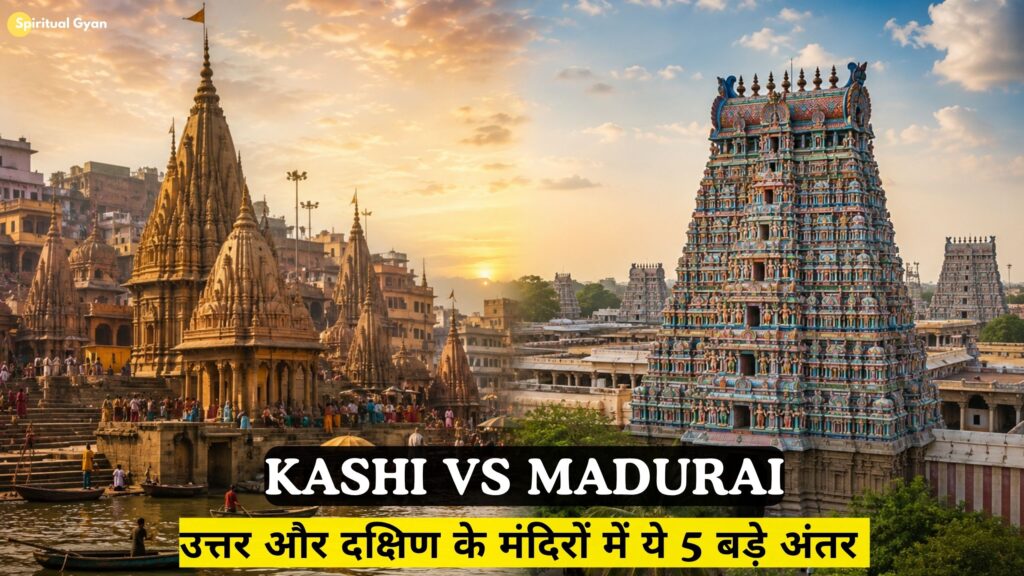
उत्तर भारत और दक्षिण भारत के मंदिरों के बीच सबसे पहला अंतर उनकी वास्तुकला में दिखाई देता है। उत्तर भारत के अधिकांश मंदिर नागर शैली में बने होते हैं, जिनमें ऊंचे शिखर (शिखरा) प्रमुख आकर्षण होते हैं। काशी विश्वनाथ, बद्रीनाथ और केदारनाथ जैसे मंदिर इसी शैली का उत्कृष्ट उदाहरण हैं।
वहीं दक्षिण भारत के मंदिर द्रविड़ शैली की भव्यता के लिए पूरी दुनिया में प्रसिद्ध हैं। यहां मंदिरों के विशाल गोपुरम (प्रवेश द्वार), पत्थरों पर की गई अद्भुत नक्काशी, विशाल प्रांगण और कई मंडप देखने को मिलते हैं। मदुरै का मीनाक्षी मंदिर, श्रीरंगम मंदिर और तिरुपति बालाजी मंदिर इसकी शानदार मिसाल हैं।
दक्षिण भारतीय मंदिरों की विशालता और कलात्मकता उन्हें केवल पूजा स्थल ही नहीं बल्कि प्राचीन भारतीय स्थापत्य कला का जीवंत संग्रहालय भी बनाती है।
2. पूजा-पद्धति और धार्मिक अनुष्ठानों की शैली अलग होती है
उत्तर भारत के मंदिरों में पूजा अपेक्षाकृत सरल और भक्तों की सीधी भागीदारी वाली होती है। कई स्थानों पर श्रद्धालु स्वयं भगवान को जल, दूध, बेलपत्र, फूल या प्रसाद अर्पित कर सकते हैं। विशेष रूप से काशी विश्वनाथ में भक्त स्वयं शिवलिंग का अभिषेक करने का सौभाग्य प्राप्त करते हैं।
इसके विपरीत दक्षिण भारत के अधिकांश बड़े मंदिरों में पूजा पूरी तरह से प्रशिक्षित पुजारियों द्वारा निर्धारित विधि-विधान के अनुसार संपन्न होती है। भक्त सामान्यतः गर्भगृह के बाहर से ही दर्शन करते हैं और भगवान को अर्पित किए जाने वाले फूल, फल या प्रसाद पुजारी के माध्यम से चढ़ाए जाते हैं।
यह व्यवस्था सदियों पुरानी आगम शास्त्र पर आधारित होती है, जिसमें पूजा के हर चरण का विस्तार से वर्णन मिलता है।
JOIN OUR WHATSAPP CHANNEL : CLICK HEAR
3. दैनिक पूजा और आरती की परंपराओं में विशेष अंतर
उत्तर भारत के मंदिरों में सुबह और शाम की आरती अत्यधिक लोकप्रिय होती है। विशेष रूप से काशी की गंगा आरती और शिव मंदिरों की भव्य आरती दुनियाभर के श्रद्धालुओं को आकर्षित करती है। यहां भजन, घंटियां, शंख और मंत्रोच्चार का वातावरण भक्तों को भाव-विभोर कर देता है।
दूसरी ओर दक्षिण भारत के मंदिरों में दिनभर कई निश्चित समय पर विस्तृत पूजा होती है। कई प्रसिद्ध मंदिरों में सुबह ब्रह्म मुहूर्त से लेकर रात तक 5 से 6 बार नियमित पूजा की जाती है। प्रत्येक पूजा के साथ वैदिक मंत्र, नादस्वरम (पारंपरिक वाद्य यंत्र), दीप सेवा और विशेष नैवेद्य अर्पित किया जाता है।
यह अनुशासित पूजा-पद्धति दक्षिण भारतीय मंदिरों की प्रमुख विशेषताओं में से एक मानी जाती है।
4. प्रसाद और भोग की परंपराओं में क्षेत्रीय संस्कृति की झलक
मंदिरों में मिलने वाला प्रसाद भी उत्तर और दक्षिण भारत की सांस्कृतिक विविधता को दर्शाता है।
उत्तर भारत के मंदिरों में लड्डू, पेड़ा, पंचामृत, हलवा, चूरमा, बताशे, मिश्री और सूखे मेवे जैसे प्रसाद अधिक देखने को मिलते हैं। वहीं भगवान शिव को बेलपत्र, धतूरा, भांग और गंगाजल अर्पित करने की विशेष परंपरा भी प्रचलित है।
दक्षिण भारत के मंदिरों में प्रसाद के रूप में पोंगल, दही चावल, इमली चावल (पुलियोदराई), नारियल, केले, पायसम और विभिन्न प्रकार के दक्षिण भारतीय व्यंजन भगवान को अर्पित किए जाते हैं। तिरुपति का प्रसिद्ध लड्डू और श्रीरंगम का विशेष प्रसाद आज पूरे देश में प्रसिद्ध है।
इस प्रकार प्रसाद भी स्थानीय खान-पान और धार्मिक परंपराओं का सुंदर प्रतिबिंब होता है।
5. त्योहारों और धार्मिक उत्सवों को मनाने का तरीका अलग होता है
उत्तर भारत में महाशिवरात्रि, सावन, नवरात्रि, देव दीपावली, गंगा दशहरा और कार्तिक पूर्णिमा जैसे पर्व अत्यंत धूमधाम से मनाए जाते हैं। काशी जैसे धार्मिक नगरों में इन अवसरों पर लाखों श्रद्धालु एकत्रित होकर विशेष पूजा-अर्चना करते हैं।
दक्षिण भारत में ब्रह्मोत्सव, पंगुनी उत्सव, वैकुंठ एकादशी, कार उत्सव (रथ यात्रा), नवरात्रि गोलू और विभिन्न मंदिरों के वार्षिक महोत्सव अत्यंत भव्य रूप से आयोजित किए जाते हैं। यहां देवताओं की विशाल शोभायात्राएं निकाली जाती हैं, जिनमें पारंपरिक संगीत, नृत्य और वैदिक अनुष्ठान प्रमुख आकर्षण होते हैं।
इन उत्सवों में स्थानीय संस्कृति और आध्यात्मिक परंपराओं का अद्भुत संगम देखने को मिलता है।
क्या उत्तर और दक्षिण की परंपराएं अलग होने के बावजूद एक ही संदेश देती हैं?
भले ही उत्तर और दक्षिण भारत के मंदिरों की पूजा-पद्धति, वास्तुकला, प्रसाद, धार्मिक आयोजन और दर्शन की व्यवस्था अलग-अलग हो, लेकिन इन सभी का मूल उद्देश्य एक ही है—भक्त और भगवान के बीच आध्यात्मिक संबंध को मजबूत करना।
सनातन धर्म की सबसे बड़ी विशेषता उसकी विविधता में एकता है। अलग-अलग भाषाएं, परंपराएं और रीति-रिवाज होने के बावजूद हर मंदिर श्रद्धा, भक्ति, सेवा और ईश्वर के प्रति समर्पण का संदेश देता है।
काशी से मदुरै तक की यात्रा केवल हजारों किलोमीटर की दूरी तय करना नहीं, बल्कि भारतीय संस्कृति, आध्यात्मिकता और सनातन परंपराओं की अद्भुत विविधता को अनुभव करना है। उत्तर भारत के मंदिर जहां सरल और भावपूर्ण भक्ति के लिए प्रसिद्ध हैं, वहीं दक्षिण भारत के मंदिर अपने अनुशासित अनुष्ठानों, भव्य स्थापत्य और प्राचीन परंपराओं के कारण विश्वभर में सम्मानित हैं।
यदि आपको भारत की आध्यात्मिक विरासत को वास्तव में समझना है, तो जीवन में कम से कम एक बार उत्तर और दक्षिण—दोनों क्षेत्रों के प्रमुख मंदिरों की यात्रा अवश्य करनी चाहिए। यह अनुभव न केवल धार्मिक आस्था को गहरा करता है, बल्कि भारतीय संस्कृति की विशालता और समृद्धि का भी साक्षात्कार कराता है।
Read Also : Shri Venkateshwara Swami Temple TTD: तिरुपति बालाजी मंदिर का इतिहास, दर्शन, महत्व और पूरी जानकारी